
How to stop no‑shows: 7 ways beauty pros keep their chairs full
Deposits, reminders, a fair cancellation policy and a waitlist: what works, why it works, and wording you can copy.
By The GlamOps Team
7 min read
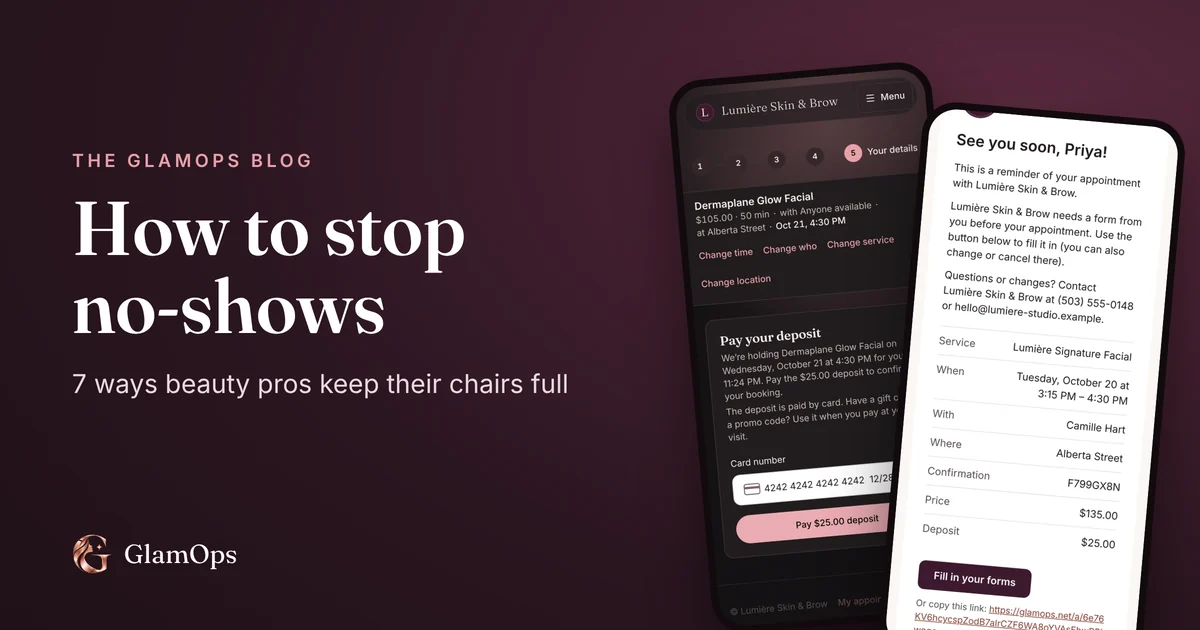
Every beauty pro knows the feeling: the room is set, the products are out, and the client never walks in. A no-show isn’t only lost income. It’s an hour you could have given to someone on your waitlist, and it often lands on your busiest days. The good news is that most no-shows are preventable with a few habits and the right settings.
What a no-show really costs you
It’s worth doing the math once, because it makes the fixes below feel a lot less awkward to ask for. Here’s an example with round numbers:
| No-shows | Service price | Lost per month | Lost per year |
|---|---|---|---|
| 1 a month | $90 facial | $90 | $1,080 |
| 2 a month | $90 facial | $180 | $2,160 |
| 1 a week | $90 facial | about $390 | about $4,680 |
That’s before the product you prepped, the client you turned away for that slot, and the time spent chasing a reply. Plug in your own prices: for most solo pros, a single missed appointment a week costs more than every app they pay for combined.
1. Take a deposit when they book
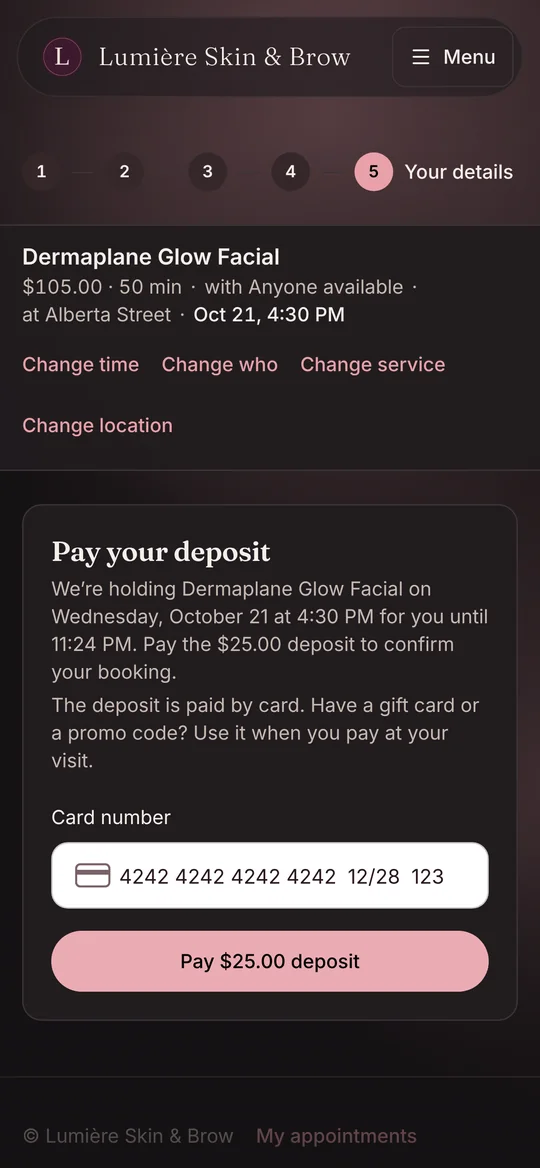
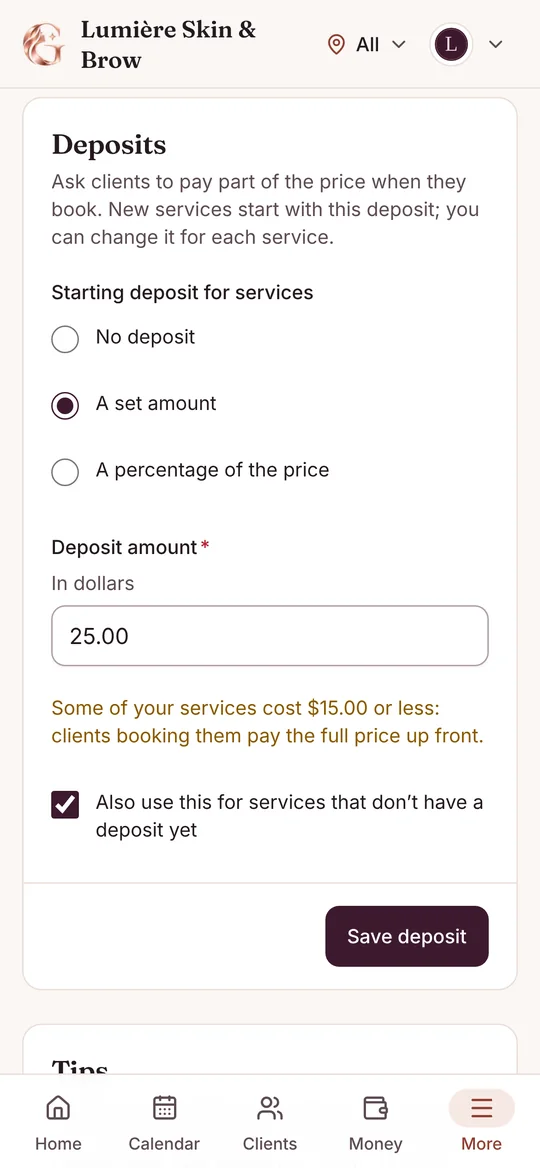
A deposit is the single most effective way to cut no-shows, because it turns a booking into a commitment. Clients who have paid something plan around the appointment; clients who haven’t sometimes forget it exists.
- How much: a common starting point is 20–50% of the service, or a flat amount like $25 for shorter services. Long or expensive services (a full set, a color correction, a bridal trial) can justify more.
- Who pays it: many pros ask every client; others ask only new clients and anyone who has missed before.
- What happens to it: it comes off the total at checkout. If the client cancels in time, your policy decides whether it’s refunded or kept.
2. Send reminders they’ll actually see
Most no-shows aren’t rude, they’re forgetful. A reminder a day or two before gives the client time to show up, or to move the appointment so you can fill the slot. Same-day reminders are too late for you to rebook; a week ahead is too early to stick.
- Send a confirmation right after booking, with the date, time, address and your policy.
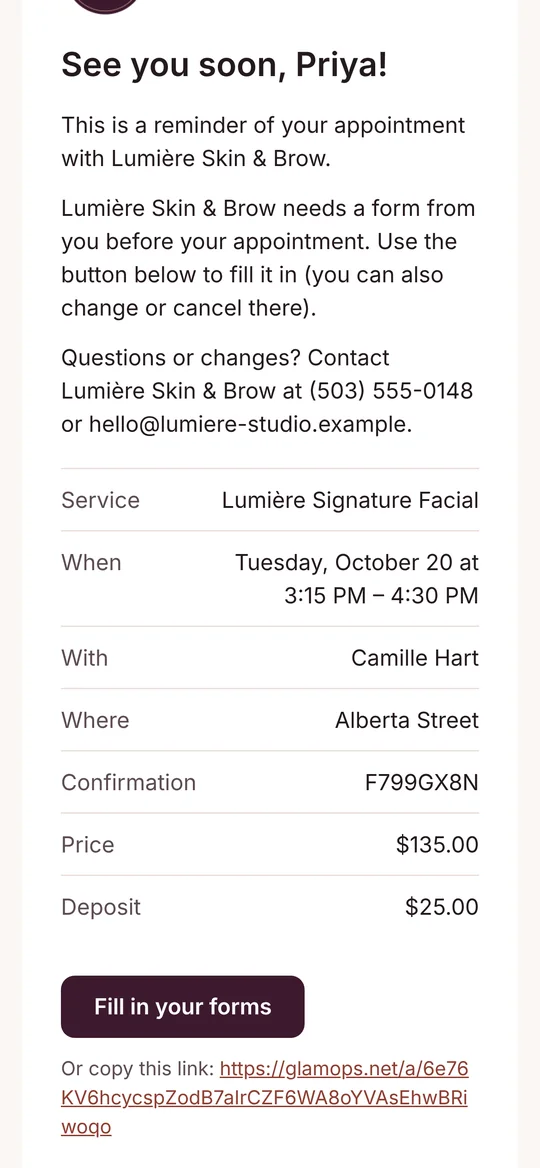
- Send a reminder 1–2 days before, with a link to move or cancel online.
- Keep it short and warm. Lead with the time and place, then the policy in one line.
3. Write a cancellation policy clients agree to
A policy only works if clients see it before they book, and if you apply it the same way for everyone. Keep it to three or four sentences: how much notice you need, what happens to the deposit, and what a no-show costs.
- 24 hours is the most common window; 48 hours suits long services and small solo businesses.
- Decide now what you’ll do for genuine emergencies (one free pass a year is common) so you’re never making it up on the spot.
- Put the policy on your booking site, in confirmations and in reminders.
4. Keep a card on file for no-show fees
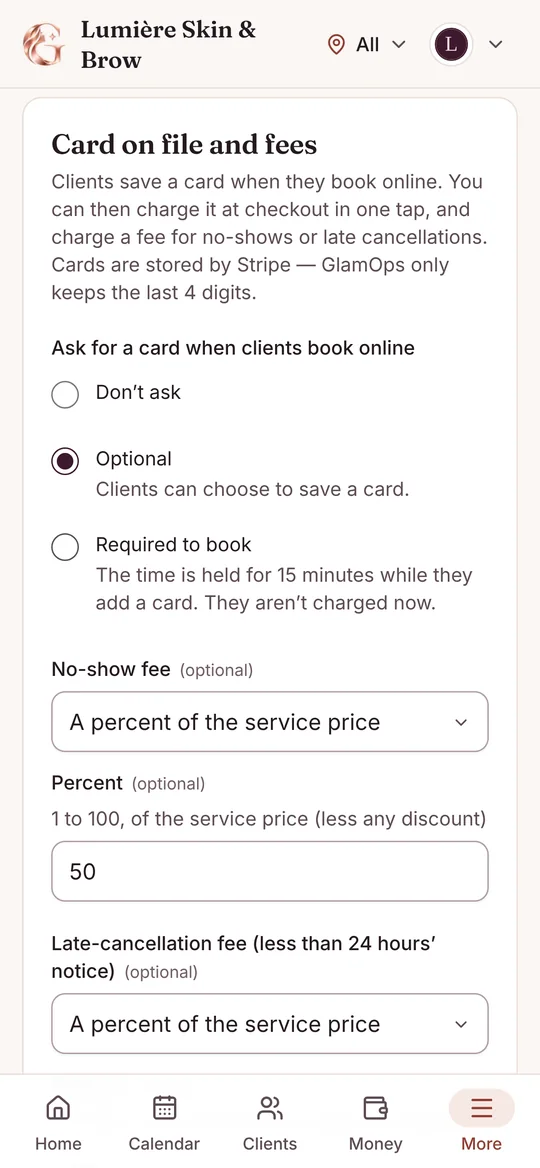
A deposit covers most of the risk. A card on file covers the rest: a no-show on a long service, or a late cancellation after the deposit window. The key is consent. The client should agree to the fee, in writing, before the appointment.
- Ask for the card when they book, with the fee spelled out next to the card field.
- Charge the fee only when your written policy says so, and send a receipt.
- Be consistent. A fee you charge some clients and not others turns into an argument.
5. Make moving an appointment easier than ghosting
Some no-shows are clients who meant to cancel but didn’t want to call, or couldn’t reach you after hours. If moving an appointment takes ten seconds online, more clients will do that instead of disappearing, and you get the slot back in time to fill it.
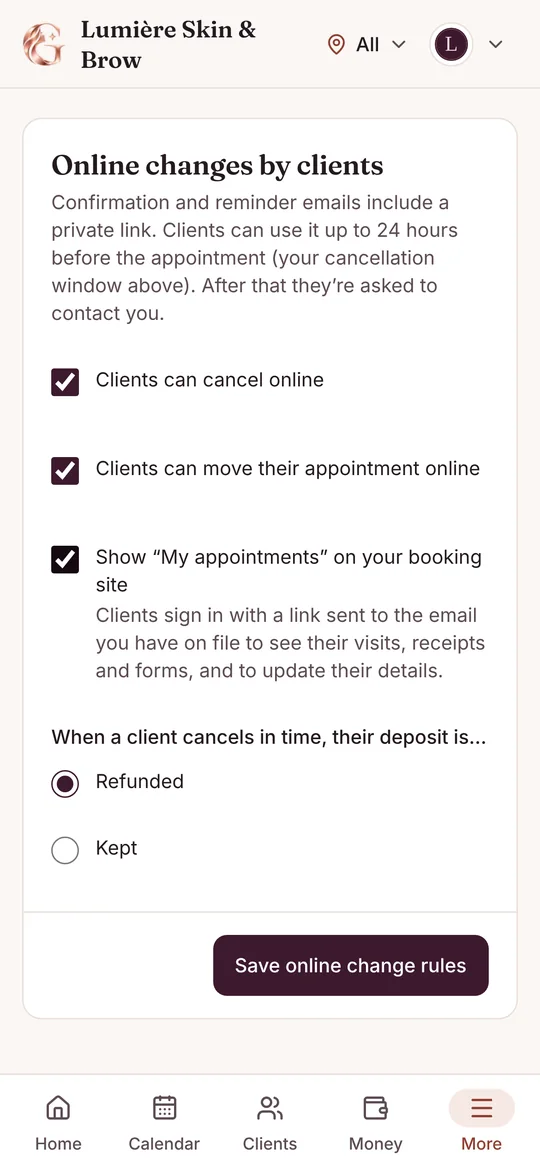
In GlamOps, every confirmation and reminder email has the client’s own link to move or cancel their appointment, up to your cancellation window. Clients can also see their bookings under “My appointments” on your booking site.
6. Fill last-minute gaps with a waitlist
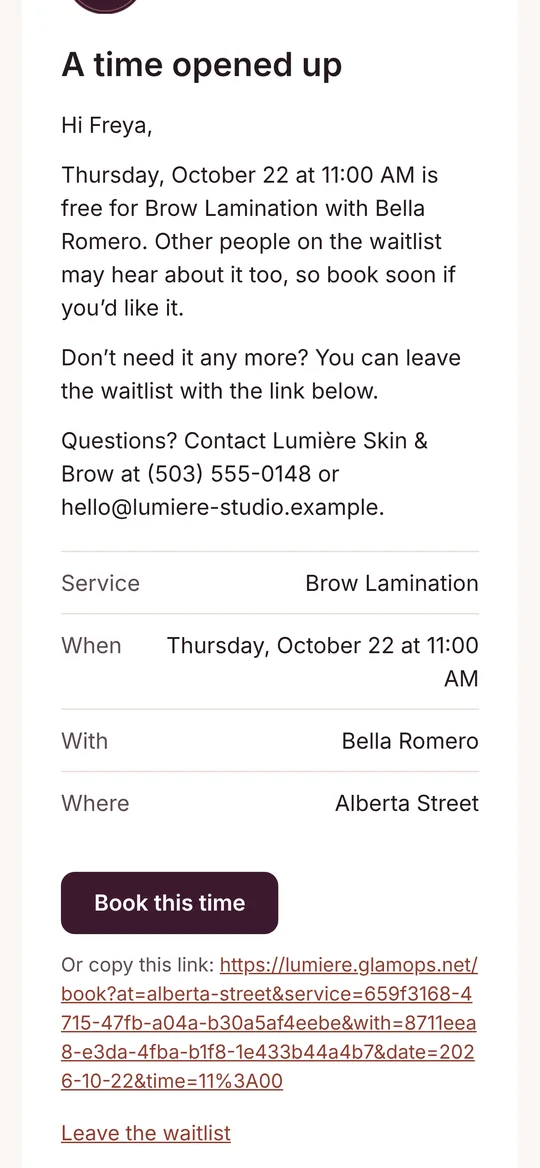
You can’t prevent every cancellation, but you can stop it from becoming an empty chair. A waitlist of clients who want an earlier time means a cancellation is an opportunity, not a loss.
7. Track no-shows and handle repeat offenders
Mark every no-show, even the ones you forgive. Over a few months you’ll see whether it’s a handful of clients or a pattern on certain days and services, and you can respond with facts instead of frustration.
- For a client with two or more no-shows, ask for a full prepayment next time, or a larger deposit.
- If new clients are the problem, approve new bookings yourself before they’re confirmed.
- Check your no-show rate monthly. If it drops after you add deposits and reminders, keep going; if not, tighten the window.
Your no-show checklist
- Turn on deposits (start with 20–50% or a flat amount).
- Confirm every booking and remind clients 1–2 days before.
- Write a four-sentence cancellation policy and show it everywhere.
- Ask for a card on file for no-show and late-cancellation fees.
- Give clients a one-tap way to move or cancel.
- Keep a waitlist to fill last-minute gaps.
- Mark no-shows and review them monthly.
Switching from another app to set this up? See how to switch to GlamOps: you can bring your clients with you, or have us move them for you. Running a specific kind of business? See what GlamOps looks like for estheticians, hair stylists and nail techs.
Frequently asked questions
How much should a deposit be for beauty services?
A common starting point is 20–50% of the service price, or a flat amount such as $25 for shorter services. Long or expensive services, and clients who have missed before, can justify a larger deposit or full prepayment.
Should I refund a deposit when a client cancels?
That’s your policy to set. Many pros refund the deposit when the client cancels with enough notice (often 24 or 48 hours) and keep it for later cancellations and no-shows. Whatever you choose, show it before the client books and apply it the same way every time.
Is it okay to charge a no-show fee?
It’s common in the beauty industry when the client agreed to the fee in advance. Show the fee in your policy and next to the card field when the client saves a card, charge it only as your policy says, and send a receipt.
When should appointment reminders be sent?
One or two days before the appointment works best: early enough for the client to move it and for you to fill the slot, close enough that they remember. Send a confirmation right after booking as well.
Do I need a card on file if I already take deposits?
Not always. A deposit covers most no-shows. A card on file helps for long or expensive services, where a deposit doesn’t cover the lost time, and for late cancellations after your window.